10,000 BCE onward
The agricultural revolution begins: forests, wetlands, grasslands, and wild species are converted into fields, grazing lands, villages, and eventually cities.
Classical–medieval eras
Empires expand timber extraction, mining, irrigation, roads, and plantation systems. Local conservation customs persist, but landscapes are increasingly treated as resources for state power.
1492 onward
European colonisation accelerates land seizure, plantation agriculture, mining, forced labour, species extraction, and the displacement of Indigenous stewardship systems.
1492–1900s
The Indigenous genocide unfolds across the Americas, Africa, Australia, and the Pacific. Estimates suggest the Indigenous population of the Americas collapsed by as much as 90% within 150 years of contact — through massacre, enslavement, introduced disease, forced displacement, and the systematic destruction of languages, ceremonies, and land-based knowledge systems. Entire nations, lineages, and ways of knowing the Earth were lost.
1700s–1800s
The industrial revolution multiplies humanity's ecological footprint through coal, factories, railways, steel, mass extraction, and fossil-fuelled growth.
1800s
North American bison herds are almost exterminated: from an estimated 30–60 million animals to fewer than 1,000 by around 1900, devastating both ecosystems and Indigenous nations of the Great Plains.
1872
Yellowstone is established as the world's first national park — a landmark in conservation, but also part of a “fortress conservation” model that often excluded Indigenous peoples from ancestral territories.
1892
John Muir helps found the Sierra Club, giving powerful voice to wilderness preservation and the protection of iconic landscapes.
1895
The Wildlife Conservation Society (WCS) is founded in New York (originally as the New York Zoological Society), pioneering the protection of wildlife and wild places and going on to support conservation in nearly 60 countries across the Amazon, Congo, Arctic, and oceans.
1948
IUCN is founded, helping create an international architecture for conservation science, protected areas, and species protection.
1951
The Nature Conservancy (TNC) is founded in the United States with a mission to conserve the lands and waters on which all life depends, growing into one of the world's largest conservation organisations through land acquisition, easements, and large-scale restoration.
1960s–1970s
Modern environmentalism rises: Rachel Carson's Silent Spring, the first Earth Day, clean air and water laws, endangered species legislation, and global awareness of pollution.
1961
WWF is founded in Switzerland, with WWF-US established the same year, becoming one of the world's most recognised conservation organisations — working across forests, oceans, freshwater, wildlife, food, and climate in more than 100 countries.
1987
Conservation International (CI) is founded, focusing on protecting the nature people depend on for food, fresh water, and livelihoods — pioneering the concept of biodiversity hotspots and partnering with Indigenous and local communities across more than 30 countries.
1987–1992
The sustainable development era begins: the Brundtland Report, Rio Earth Summit, Convention on Biological Diversity, and UN climate framework.
2000s–2020s
Conservation expands from parks and species to climate, biodiversity, oceans, food systems, Indigenous rights, and Earth jurisprudence.
2019
IPBES warns that around 1 million species face extinction unless drivers of biodiversity loss are urgently reduced.
2024
WWF's Living Planet Report finds an average 73% decline in monitored wildlife populations over half a century.
Every day, now
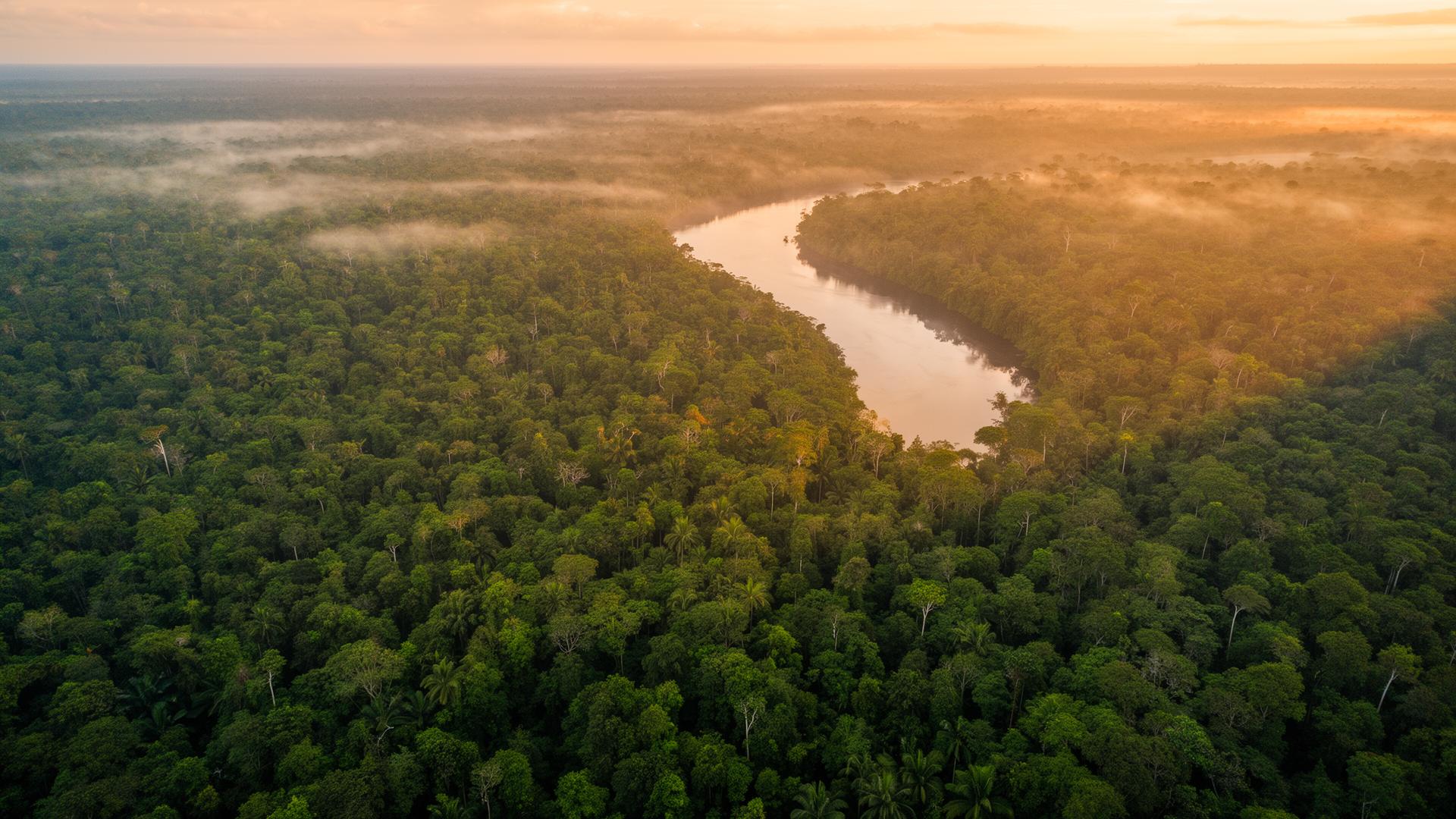
The Earth loses living ecosystems at an industrial pace. The planet sheds roughly 27 football fields of forest every minute — about 10 million hectares of forest cleared each year. The Amazon alone loses on the order of 10,000 hectares a day to logging, cattle, soy, and mining; the Congo Basin, Indonesia's peatlands and rainforests, the Cerrado, the Gran Chaco, Madagascar's forests, and Southeast Asia's mangroves are being cleared at comparable or faster rates. Coral reefs, grasslands, and wetlands are vanishing in parallel — most of it on, or adjacent to, Indigenous and traditional territories.
Today
Coral reefs, glaciers, oceans, forests, rivers, soils, and species are under simultaneous pressure from climate change, pollution, industrial agriculture, mining, overfishing, and habitat loss.
2026 and beyond
The Earth Shield Fund emerges as a global Indigenous-led regeneration movement — weaving together 52 biocultural territories into a living shield of protected, restored, and sovereign lands stewarded by the Original Peoples who have safeguarded them for millennia.
The long arc
Stewardship, rupture, and return.
For most of human history, the lands, forests, rivers, grasslands, and oceans that sustained life were cared for by Original Peoples whose cultures evolved in deep relationship with place. Across continents, Indigenous nations developed sophisticated systems of stewardship: managing fire regimes, protecting watersheds, conserving wildlife, rotating harvests, preserving seeds, and maintaining sacred natural sites as centres of ecological balance.
Waves of colonisation, industrialisation, and extractive economics have caused destruction on an unprecedented scale — clearing major forests, exhausting soils, polluting rivers, and driving species toward extinction. Modern conservation arose in response, creating parks, reserves, and environmental laws, yet too often excluded, displaced or overlooked the very peoples who had long safeguarded these landscapes.
Today, as the world faces a sixth mass extinction, collapsing wildlife populations, coral reef dieback, melting glaciers, polluted oceans, and accelerating climate instability, one truth is increasingly clear: many of the planet's last great ecological frontiers survive precisely because Original Peoples have defended them. From the Amazon to the Arctic, from Australia to the Congo Basin, from mountain ranges to island ecosystems, Indigenous territories contain some of the highest remaining levels of biodiversity, healthiest forests, and most intact carbon sinks on Earth. These lands are not wilderness by accident — they are living landscapes shaped and protected through generations of custodianship, knowledge, restraint, and reciprocal responsibility.
The future of stewardship must place Original Peoples at its centre.
It is in this spirit that the Earth Shield Fund has been conceived as the world's first global Indigenous-led ecosystem regeneration initiative: a vehicle to protect and regenerate 52 biocultural territories through Indigenous leadership, stewardship finance, territorial regeneration, and legal protection. It represents a historic shift — from protection done to communities, to regeneration led by those who have successfully stewarded nature for millennia. In an age of planetary crisis, safeguarding the last frontiers of life means standing with the peoples whose very existence depends on keeping them alive.